Payment by Invoice |
 How to find our store
 info@kurierbedarf.com
 Purchasing for Swiss customers
Keeping cargo secure during transport is essential for safety, protecting valuable goods and reducing the risk of damage. Whether you operate delivery vans, commercial vehicles or heavy goods trucks, preventing loads from sliding is one of the key elements of professional cargo securement.
Anti slip mats have become one of the most effective solutions for increasing friction between cargo and the loading surface. Used correctly, they help reduce load movement, improve the effectiveness of lashing equipment and contribute to safer transport operations.
In this guide, you'll learn how anti slip mats work, when to use anti slip pads instead of full-size mats, how friction affects cargo securement and how to choose the right solution for different transport applications.
What You'll Learn
- How anti slip mats improve cargo securement
- Why friction plays such an important role
- The difference between anti slip mats, pads and strips
- How to choose the right thickness
- Common cargo securement mistakes
- Best practice recommendations for professional transport
What Are Anti Slip Mats?
Anti slip mats are high-friction rubber mats placed between cargo and the loading surface. They increase friction, reduce load movement during transport and improve the effectiveness of cargo securement systems when used together with appropriate lashing equipment.
Anti slip mats are designed to minimise movement between the cargo and the vehicle floor. Manufactured from durable recycled rubber granulate, they create a high-friction contact surface that helps keep loads stable during braking, acceleration and cornering.
Rather than replacing lashing straps or other securing equipment, anti slip mats work alongside them. By increasing friction, they reduce the forces acting on the securing system and contribute to a safer transport operation.
Why Do Loads Move During Transport?
Every moving vehicle is affected by physical forces. When a van or truck accelerates, brakes or changes direction, the cargo naturally tends to continue moving due to inertia.
Without sufficient friction between the load and the vehicle floor, even well-balanced cargo can begin to slide. This movement may lead to damaged goods, unstable loads or unsafe driving conditions.
Professional cargo securement focuses on controlling these forces by combining friction, proper load distribution and suitable lashing equipment.
Most cargo movement occurs because friction between the load and the vehicle floor is too low. Anti slip mats increase friction, helping to reduce load movement and improve transport safety.
The Biggest Misconception About Anti Slip Mats
One of the most common misunderstandings is that anti slip mats alone are enough to secure cargo.
They are not.
Anti slip mats significantly improve friction, but they should always be used as part of a complete cargo securement system. Ratchet straps, lashing points, cargo bars and proper load distribution remain essential for safe transport.
Think of anti slip mats as a performance upgrade for your cargo securement system rather than a replacement for it.
Understanding Friction
Friction is the force that resists movement between two surfaces. In cargo transport, higher friction means greater resistance against sliding.
Without anti slip material, smooth pallets or machinery resting on painted or metal loading floors may move much more easily during transport.
By placing anti slip mats underneath the load, the friction coefficient increases considerably, helping to stabilise the cargo before additional securing methods are applied.
Why the Friction Coefficient Matters
The friction coefficient (μ) measures how much resistance exists between two surfaces. A higher friction coefficient means cargo is less likely to slide during transport. Anti slip mats significantly increase friction, making cargo securement more effective when combined with suitable lashing equipment.
Every load transported by van, truck or trailer is affected by acceleration, braking and cornering forces. These forces constantly try to move the cargo.
The only thing preventing that movement is the resistance created between the load and the vehicle floor. This resistance is known as friction.
Without sufficient friction, even correctly loaded cargo can begin to slide, increasing the risk of product damage and unsafe driving conditions.
High-quality anti slip mats increase the friction coefficient between the load and the loading surface, reducing movement before the lashing system even starts working.
Practical Example
Imagine transporting a heavy toolbox inside a service van. On a smooth wooden or painted floor the toolbox may slide forward under heavy braking.
Place the same toolbox on a quality anti slip mat and the increased friction helps keep it in position, allowing the securing straps to work more efficiently.

Understanding the Friction Coefficient (μ)
The friction coefficient is represented by the Greek letter μ (mu). It describes how much grip exists between two contacting materials.
Higher values indicate better resistance against movement, while lower values mean cargo is more likely to slide during transport.
| Friction Level | Effect on Cargo |
|---|---|
| Low | Cargo can move more easily. |
| Medium | Improved stability. |
| High | Maximum resistance against sliding. |
The actual friction coefficient always depends on both contact surfaces. This is why professional cargo securement should never rely on theoretical values alone.
Choosing the Right Anti Slip Mat
Not every transport application requires the same type of anti slip mat. The correct choice depends on the cargo, the contact area and the weight of the load.
Professional transport operators generally choose between four different product types.
| Application | Recommended Product |
|---|---|
| Euro pallets | Full-size Anti Slip Mats |
| Heavy machinery | Anti Slip Pads |
| Steel profiles | Anti Slip Strips |
| Custom applications | Anti Slip Rolls |
Anti Slip Mats vs Anti Slip Pads
Choosing between full-size mats and anti slip pads depends mainly on how the load contacts the vehicle floor.
If the cargo has a large contact area, full-size mats provide the most effective solution by supporting the entire load.
When only a few contact points exist, anti slip pads are often the better choice. They provide excellent friction exactly where it is needed while reducing material usage and cost.
| Anti Slip Mats | Anti Slip Pads |
|---|---|
| Large contact areas | Individual support points |
| Ideal for pallets | Ideal for machinery |
| Maximum surface coverage | Material-efficient solution |
| Even load distribution | Flexible positioning |
3 mm or 8 mm?
Mat thickness plays an important role when selecting the right anti slip solution.
3 mm mats are suitable for most pallet transport and general commercial applications. They provide excellent friction while remaining lightweight and easy to handle.
8 mm mats are recommended for heavy machinery, concentrated loads and demanding industrial applications where higher pressure resistance is required.
Expert Tip: Don't choose a thicker mat simply because it seems stronger. Always select the thickness based on the type of cargo, contact area and expected load. Using the right mat for the application delivers better performance and longer service life.
Best Practices for Using Anti Slip Mats
For maximum performance, anti slip mats should always be used on clean, dry loading surfaces and combined with appropriate cargo securement equipment. Regular inspection and correct positioning are essential to ensure consistent friction and safe load restraint.
Even the highest-quality anti slip mat can only perform effectively when used correctly. Professional cargo securement is always based on the combination of friction, proper load distribution and suitable lashing equipment.
Before placing an anti slip mat, ensure that both the loading surface and the contact area of the cargo are clean, dry and free from oil, grease or loose dirt. Contamination can significantly reduce the available friction.
Damaged mats should be replaced immediately. Cuts, tears or excessive wear may reduce their effectiveness and compromise transport safety.
Common Cargo Securement Mistakes
Many cargo securement problems are caused by small mistakes that can easily be avoided. Understanding these common issues helps improve transport safety and reduces the risk of damaged goods.
| Common Mistake | Best Practice |
|---|---|
| Dirty loading surface | Clean and dry the floor before loading. |
| Using damaged anti slip mats | Replace worn or damaged mats immediately. |
| Relying only on anti slip mats | Always use suitable ratchet straps and lashing points. |
| Incorrect mat positioning | Support every contact point between cargo and vehicle floor. |
| Choosing the wrong mat thickness | Select the mat according to the cargo weight and application. |
Typical Applications
Anti slip mats are used across a wide range of industries where safe transport is essential.
| Industry | Typical Cargo |
|---|---|
| Logistics | Euro pallets and general freight |
| Construction | Building materials and equipment |
| Engineering | Machinery and industrial components |
| Service Vehicles | Toolboxes and equipment cases |
| Manufacturing | Production parts and finished goods |
Recommended Cargo Securement Equipment
Anti slip mats deliver the best results when combined with other professional cargo securement products.
- Ratchet Straps
- Tie Down Straps
- Airline Rails
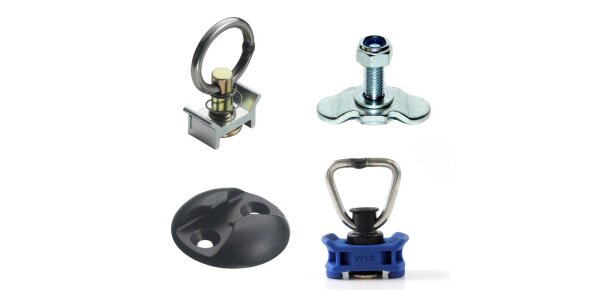
- Airline Fittings
- Cargo Bars
- Lashing Points
Together, these products create a complete cargo securement system suitable for vans, trucks and trailers.
Conclusion
Anti slip mats are one of the simplest and most effective ways to improve cargo securement. By increasing friction between the load and the vehicle floor, they help reduce cargo movement and support safer transport operations.
Whether you transport pallets, machinery, building materials or commercial equipment, selecting the correct anti slip solution improves both safety and efficiency.
Combined with suitable ratchet straps and professional securing methods, anti slip mats become an essential part of a reliable cargo securement system for modern commercial transport.
Key Takeaways
- Increase friction before securing the load.
- Choose the correct mat for the application.
- Inspect mats regularly for wear and damage.
- Always combine anti slip mats with suitable securing equipment.
- Professional cargo securement starts with proper planning.