 Payment by Invoice |
 How to find our store
 info@kurierbedarf.com
 Purchasing for Swiss customers
Airline rails - Product range
Whether used in a van, commercial vehicle, trailer, camper van or custom vehicle conversion, Airline Rails provide flexible mounting and load securing points exactly where they are needed. Compatible fittings can be positioned along the rail and moved again whenever the load, equipment or vehicle layout changes.
Choosing the right Airline Rail, however, involves more than simply selecting the required length. The rail profile, installation position, available space, surface finish and compatible accessories all play an important role. Our range therefore includes different Airline Rail profiles for installation on walls, floors and ceilings as well as for suitable interior and exterior applications.
...mehr lesen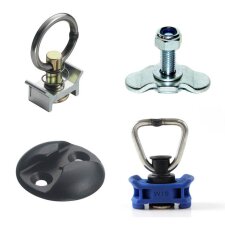
With the right Airline Rail accessories, an Airline Rail becomes...
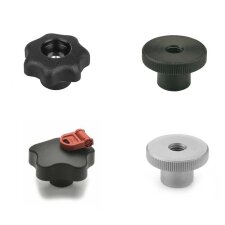
Handles and knurled nuts are small aids with a big impact when it...
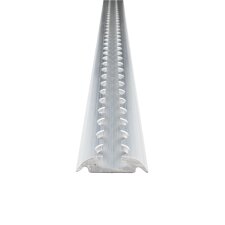
The Light semi-circular profile airline rail from...
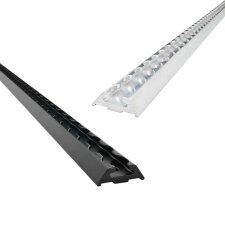
The trapezoidal Airline Rail combines a flat mounting surface...

The perfect combination rail for your next adventure – airline...
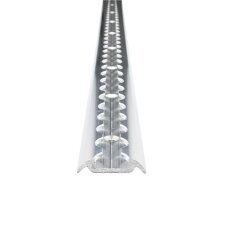
The Slim semi-circular airline rail, 40 mm, drilled, is the ideal...
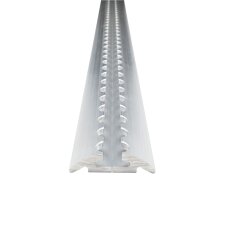
Standard semi-circular profile airline rail – the versatile...
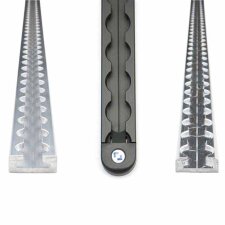
If you need to work in confined spaces but still require reliable...
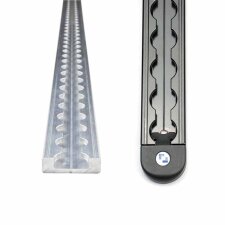
The Airlineschiene Eckprofil Light is the perfect choice when it...
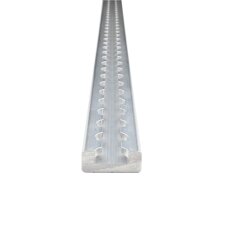
Standard corner profile airline rail – robust lashing rail for...
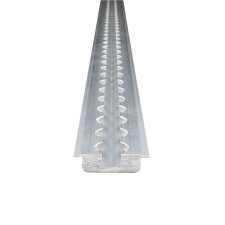
Airline rail floor profile – a secure and versatile solution for...
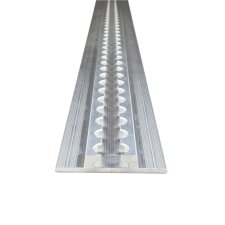
Standard flat profile airline rail – robust lashing rail for safe...

The Strong flat profile airline rail is the particularly robust...
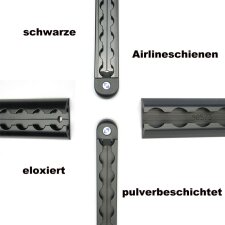
The powder-coated black airline rails impress with their elegant...
Airline rails are indispensable when it comes to securely...
Which Airline Rail is right for my van or vehicle conversion?
In short: The right Airline Rail mainly depends on the installation position, available space, intended use and required accessories. Flat and standard profiles are versatile choices for vans and commercial vehicles, floor profiles can be integrated into suitable vehicle flooring systems, while compact profiles are useful where installation height is limited. For camper vans, off-road vehicles and suitable exterior applications, special profiles such as trapezoidal Airline Rails can offer additional mounting possibilities.
Choose your Airline Rail according to the application
There is no single Airline Rail profile that is ideal for every installation. A rail mounted to the side wall of a commercial van has different requirements from a recessed rail in the vehicle floor or an externally mounted rail on a camper van.
Defining the installation position and intended use first makes it much easier to narrow down the available options.
| Application | Suitable profile | Typical advantage |
|---|---|---|
| Van side wall | Flat / standard profile | Versatile base for load securing and accessories |
| Limited installation space | Light / Slim profile | Compact design with reduced installation height |
| Vehicle floor | Floor profile | Integration into a suitably designed vehicle floor |
| Ceiling / interior conversion | Suitable flat or half-round profile | Flexible mounting options with a compact design |
| Camper van / off-road vehicle | Trapezoidal profile | Flat mounting surface and versatile installation options |
| Custom vehicle conversion | Depends on the installation | Rail system can be matched to the application and accessories |
Practical tip: Do not choose an Airline Rail based on appearance alone. The installation position, available space and fittings you intend to use should be established before selecting the profile and length.
Airline Rails for vans and Commercial Vehicles
Airline Rails are particularly useful in vans and Commercial Vehicles because they allow load securing points to be adapted to changing transport requirements. Instead of relying exclusively on a small number of fixed anchor points, compatible fittings can be positioned along the rail wherever they are needed for the current load.
This is especially useful when transport tasks change regularly. Toolboxes, machinery, boxes, equipment and other cargo do not always require securing points in exactly the same positions.
Combined with suitable lashing straps, Airline Rail fittings, cargo bars or other compatible accessories, the system can be adapted to a wide range of transport and vehicle conversion applications.
What types of Airline Rail profiles are available?
The profile shape influences how an Airline Rail can be installed and integrated into a vehicle conversion. Looking at the different designs before buying therefore makes sense.
Flat profile – the versatile all-rounder
Flat-profile Airline Rails are suitable for many standard applications in vans, trailers and custom vehicle conversions. Depending on the installation, they can be mounted to suitable side walls and other flat surfaces.
A flat or standard profile is particularly useful when a versatile rail system is required for changing load securing and mounting tasks.
Half-round profile – compact and versatile
A half-round Airline Rail has a rounded outer profile and can be useful where a compact, clean-looking surface-mounted installation is required.
Depending on the particular version, it can be suitable for side-wall, ceiling and custom interior installations.
Floor profile – integrated into the vehicle floor
An Airline Rail floor profile is designed for integration into a suitably constructed vehicle floor.
This makes it possible to create flexible mounting or securing points directly at floor level. The performance of the complete installation depends not only on the rail itself but also on the design and attachment of the entire flooring system.
Light and Slim profiles – when installation height matters
Light and Slim Airline Rails are useful where a compact profile and reduced installation height are important. They can be an interesting alternative for certain interior conversions or installations where space is limited.
However, the more compact profile geometry can influence which accessories are compatible. The combination of rail and fitting should therefore always be checked before installation.
Trapezoidal Airline Rails – for camper vans, off-road vehicles and custom installations
Our trapezoidal Airline Rails combine characteristics of traditional Airline Rail systems with a wide, flat mounting surface. Manufactured in Germany, these profiles are particularly interesting for custom vehicle, camper van and off-road installations.
Depending on the complete installation, they can be used for suitable interior and exterior applications – for example as part of individual mounting solutions for storage boxes, water or fuel containers, recovery boards and other equipment.
The trapezoidal rails are available in different lengths and, depending on the version, in natural aluminium or black.
Wall, floor or ceiling – the installation position matters
An Airline Rail can only perform as intended when both the profile and its attachment to the vehicle or supporting structure are suitable for the planned application.
Different installation methods may be appropriate depending on the vehicle, rail profile and overall construction. These may include bolted, riveted or individually engineered mounting solutions.
There is therefore no universal installation method that is suitable for every Airline Rail and every vehicle. The substrate, material thickness, direction of load, expected forces and design of the vehicle conversion must all be considered together.
Important: A high load rating for an individual rail or fitting does not automatically mean that the complete installed system can carry the same load.
25 mm or 25.4 mm – what does the Airline Rail hole spacing mean?
The characteristic hole pattern of an Airline Rail allows compatible fittings to be inserted at different positions along the rail. Many systems use a spacing of 25 mm or 25.4 mm.
This creates a large number of possible attachment positions. When the load or vehicle layout changes, a fitting can be removed and repositioned at another suitable location.
However, hole spacing alone does not guarantee compatibility in every possible combination. With Light, Slim and other special profiles in particular, the geometry of the rail and the design of the fitting should also be checked.
Internationally, similar rail systems may also be described as L-Track. The exact specifications and compatibility of the individual rail and fitting should nevertheless always be verified rather than relying on terminology alone.
Which accessories are available for Airline Rails?
An Airline Rail becomes a versatile mounting and load securing system when combined with the right accessories. Different fittings and components are available depending on the intended application.
| Accessory | Typical function |
|---|---|
| Single-Stud fitting | Flexible attachment or anchor point, depending on the fitting design |
| Double-Stud fitting | Engages two rail positions for suitable applications |
| M8 threaded fitting | Threaded mounting point for suitable components, brackets or modules |
| Lashing strap with Airline fitting | Direct connection between a suitable lashing strap and compatible Airline Rail |
| Cargo bar / load lock bar | Additional restraint for suitable cargo and transport applications |
| End caps | Clean finish for suitable rail profiles |
Good to know: Not every fitting automatically fits every Airline Rail. The rail profile, internal geometry and design of the individual fitting must be compatible.
Threaded fitting, ring fitting or lashing strap with Airline fitting?
The right accessory depends primarily on what you want to mount or secure.
A ring fitting can create a flexible attachment point for suitable connecting or load securing equipment. An M8 threaded fitting, on the other hand, provides a threaded stud for mounting suitable components. Lashing straps with integrated Airline fittings can connect directly to a compatible rail.
If several types of equipment will be used with the rail system, it makes sense to consider the planned accessories before choosing the Airline Rail itself.
Airline Rails for camper vans and off-road vehicles
Airline Rails are also popular for camper van conversions and off-road vehicles because they can form the basis of modular mounting systems.
Inside the vehicle, suitable rails can be incorporated into individual conversion concepts. For appropriate exterior installations, specialised profiles can provide flexible mounting options for equipment and accessories.
Exterior installations require additional consideration. The rail, fastening method, supporting structure, environmental exposure and combination of materials all need to be suitable for the intended use.
5 common mistakes when choosing an Airline Rail
- Choosing by length alone: The profile shape and installation position are just as important.
- Assuming every fitting is compatible: Hole spacing and profile geometry must suit the particular fitting.
- Ignoring the supporting structure: The rail is only one component of the complete mounting system.
- Not considering the final application: Wall mounting, floor integration and exterior installations have different requirements.
- Choosing accessories afterwards: Knowing which fittings, straps or mounting components will be used before buying the rail helps prevent compatibility problems.
Airline Rails and load securing – consider the complete system
For professional load securing, the capacity of a single component should never be considered in isolation. The complete system includes the cargo, securing equipment, fitting, Airline Rail, rail attachment and vehicle structure.
A strong fitting cannot compensate for an unsuitable or inadequately installed rail. Likewise, a high-quality Airline Rail cannot compensate for accessories that are inappropriate for the intended application.
For safety-relevant installations, the technical specifications of the individual components and the requirements of the specific vehicle installation must therefore always be observed.
Which Airline Rail fits your vehicle and application?
When choosing an Airline Rail, start with four questions: Where will the rail be installed? How much installation space is available? What needs to be mounted or secured? Which fittings and accessories will be used?
Flat and standard profiles are versatile choices for many conventional van and Commercial Vehicle applications. Compact profiles can be useful where installation height is limited, while dedicated floor profiles are available for integration into suitable vehicle flooring systems. Camper van and off-road conversions can benefit from specialised profiles such as trapezoidal Airline Rails.
Choosing the rail according to the complete application creates a flexible system that can adapt to the vehicle, cargo and equipment – rather than forcing every transport or conversion task to work around a small number of fixed mounting points.
FAQ – Choosing and using Airline Rails
Which Airline Rail is suitable for a van?
Flat and standard Airline Rail profiles are suitable for many van applications. The right version depends on the installation position, available space, intended accessories and planned loads. Floor, Light or Slim profiles may be more suitable for floor integration or installations where space is limited.
What is the difference between flat, half-round and floor Airline Rails?
The main difference is the profile geometry and intended installation. Flat profiles are versatile, half-round profiles provide a compact surface-mounted solution, and floor profiles are designed for integration into suitably constructed vehicle floors.
Does every Airline Rail fitting fit every Airline Rail?
No. Compatible hole spacing is important, but it does not guarantee compatibility in every case. The profile geometry and design of the fitting can also affect whether a particular combination works correctly.
Can Airline Rails be installed on walls, floors and ceilings?
Depending on the rail profile and vehicle conversion, Airline Rails can be installed in different positions. The appropriate installation method depends on the profile, supporting structure, vehicle construction and expected loads.
Which Airline Rail is suitable for camper vans and off-road vehicles?
The best profile depends on the installation position and intended use. In addition to conventional Airline Rail profiles, trapezoidal rails can be particularly useful where a flat mounting surface and flexible options for suitable interior or exterior installations are required.
What does 25 mm or 25.4 mm Airline Rail spacing mean?
The spacing refers to the regular positioning of the fitting locations along the rail. Compatible fittings can therefore be inserted at different positions and moved when required. Hole spacing alone, however, does not guarantee compatibility with every rail profile and fitting design.
Is Airline Rail the same as L-Track?
The terms are often used for similar modular rail systems, particularly in different international markets. However, terminology alone should not be used to determine compatibility. Always check the dimensions, profile geometry and specifications of the individual rail and fitting.