Payment by Invoice |
 How to find our store
 info@kurierbedarf.com
 Purchasing for Swiss customers
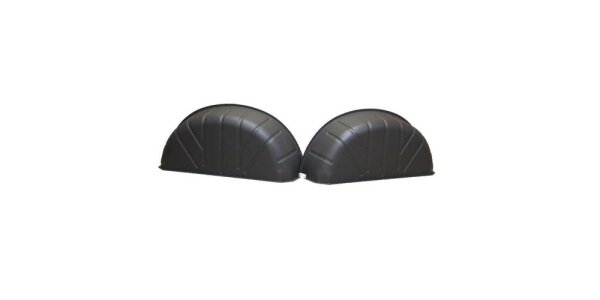
Quick overview: Wheel arch covers protect the projecting wheel arches inside a van's load area from the typical wear and contact caused by everyday loading and unloading. Vehicle-specific ABS covers can be installed on their own or combined with a load floor and side wall lining.
In this guide: Wheel arch protection · ABS plastic · 3 mm material thickness · vehicle-specific fit · retrofitting · clamping, screwing or bonding · load floors · side wall lining · common mistakes · vehicle selection
The wheel arches are among the most exposed parts of a van's load area. They project into the usable cargo space and can easily come into contact with toolboxes, transport containers, parcels, machinery and other cargo during everyday use.
A wheel arch cover for a van is fitted over this part of the vehicle to create an additional protective layer. This can be particularly useful in commercially used vans that are loaded and unloaded frequently and therefore experience considerably more wear inside the load area.
However, not every wheel arch cover fits every van. The vehicle model, generation, drivetrain, vehicle length and existing load area conversion can all affect which version is suitable.
Are wheel arch covers worth fitting in a van?
Quick answer: Wheel arch covers are particularly useful in vans that are used commercially and loaded and unloaded on a regular basis. They protect the projecting wheel arches from direct contact with tools, boxes, parcels and other cargo. Vehicle-specific covers can be used on their own or combined with a load floor and side wall lining.
Why are the wheel arches particularly exposed?
Large parts of a van's load area consist of relatively flat surfaces. The wheel arches are different: they project noticeably into the usable cargo space.
This places them directly in the path of cargo during loading and unloading. A toolbox may be pushed sideways, a parcel may be moved across the floor or a machine may be positioned close to the side of the vehicle – all of which can bring the load into direct contact with a wheel arch.
Typical sources of wear include:
- toolboxes and material cases
- parcels and transport containers
- machines and work equipment
- frequent loading and unloading
- cargo being moved across the load area
- frequently changing loads in commercial vehicles
A wheel arch cover cannot prevent every type of damage and it does not replace proper load securing. Its purpose is to provide an additional protective layer so that the original vehicle surface is not directly exposed to every impact or contact.
What does a wheel arch cover protect – and what doesn't it protect?
The purpose of a wheel arch cover is quite specific: it protects the left and right wheel arch areas inside the vehicle.
It does not automatically protect the load floor, side walls or the entire interior. Separate protection systems are available for these areas.
| Component | Protected area | Main purpose |
|---|---|---|
| Wheel arch covers | Left and right wheel arches | Protects the projecting wheel arch areas |
| Load floor | Cargo floor | Protects the heavily used floor area |
| Side wall lining | Interior side walls | Protects the side surfaces of the load area |
Why are wheel arch covers vehicle-specific?
The shape of a wheel arch is determined by the vehicle platform, body design, suspension and the construction of the individual van. A suitable cover therefore cannot simply be selected according to approximate width or height.
Even vans with the same model name may have different wheel arch shapes after a change of vehicle generation.
The Ford Transit Custom is a good example. The first generation from 2013 to 2023 and the Transit Custom II from 2024 require different vehicle-specific solutions.
With the Mercedes-Benz Sprinter, the vehicle configuration can also be relevant. Depending on the product, it may be necessary to distinguish between front-wheel drive and rear-wheel/all-wheel drive versions.
For the VW Caddy, the vehicle generation and length may also need to be considered.
When choosing wheel arch covers, asking "Which van do I drive?" is not always enough. Model year, generation and, where applicable, vehicle configuration should also be checked.
Platform-sharing vans – does the same wheel arch cover automatically fit?
Several commercial vehicles may share the same basic vehicle platform and be closely related technically. Examples include vehicle families such as the Fiat Ducato, Peugeot Boxer and Citroën Jumper or the VW Crafter and MAN TGE.
However, this does not mean that every accessory can automatically be used across all related models. The specific vehicle compatibility stated for the individual product remains the deciding factor.
You should therefore never assume that a wheel arch cover fits another model simply because the vehicles are technically related.

Why is ABS plastic suitable for wheel arch covers?
The wheel arch covers available from Kurierbedarf are made from 3 mm thick ABS plastic.
For this particular application, the combination of stability and flexibility is important. The cover needs to retain its shape while still being suitable for use as a vehicle-specific moulded component.
The ABS material used is also UV-resistant.
| Property | What it means in practice |
|---|---|
| 3 mm material thickness | Provides an additional plastic layer over the wheel arch |
| Flexible | Suitable for shaped, vehicle-specific covers |
| UV-resistant | Suitable for long-term use in the vehicle |
| Plastic surface | Creates a barrier between the cargo and the original wheel arch surface |
Why 3 mm rather than simply using the thickest material possible?
When it comes to wheel arch covers, thicker material is not automatically better.
The cover needs to be sufficiently robust while also matching the shape of the wheel arch and integrating properly into the existing load area. The wheel arch covers in our range therefore use 3 mm thick ABS plastic.
Material thickness should always be considered together with the design, shape and intended use rather than following the simple rule that thicker must always be better.
Can wheel arch covers be retrofitted?
Yes. Wheel arch protection does not necessarily have to be installed at the same time as the rest of the load area conversion.
This makes it particularly useful for vans that already have a load floor or side wall lining but still have exposed wheel arches.
The opposite approach is also possible: the wheel arches can be protected first, while a load floor or side wall lining is added later.
Wheel arch covers are therefore also suitable for a step-by-step van load area conversion.
Installing wheel arch covers – clamp, screw or bond?
Depending on the vehicle, wheel arch cover and existing interior conversion, different installation methods may be possible.
Clamping wheel arch covers into place
Where the construction allows it, a wheel arch cover may be secured using existing components or together with other parts of the load area lining.
This can be particularly useful when integrating the cover into an existing load floor or other interior components.
Screwing wheel arch covers into place
Mechanical fixing with screws provides a defined attachment. However, the appropriate fixing points and the construction of the individual vehicle must always be considered.
The correct fasteners depend on the vehicle and installation situation.
Bonding wheel arch covers
Depending on the design, bonding may also be an option. The adhesive, substrate and intended application must be compatible with each other.
For this reason, it is not sensible to recommend one universal adhesive for every installation.
The most suitable installation method depends on the individual wheel arch cover and vehicle. Fixings and installation materials are not automatically included with every product. Always check the product-specific information before installation.
Which installation method is best?
There is no single installation method that is best for every van. The existing load area conversion and the design of the cover determine the most suitable solution.
| Method | May be useful when ... | What to consider |
|---|---|---|
| Clamping | the cover is integrated into an existing interior conversion | The construction must provide secure retention |
| Screwing | a mechanical fixing is intended | Check suitable fixing points and the vehicle construction |
| Bonding | a suitable adhesive connection can be created | The adhesive must be compatible with the substrate and application |
Combining wheel arch covers with a load floor
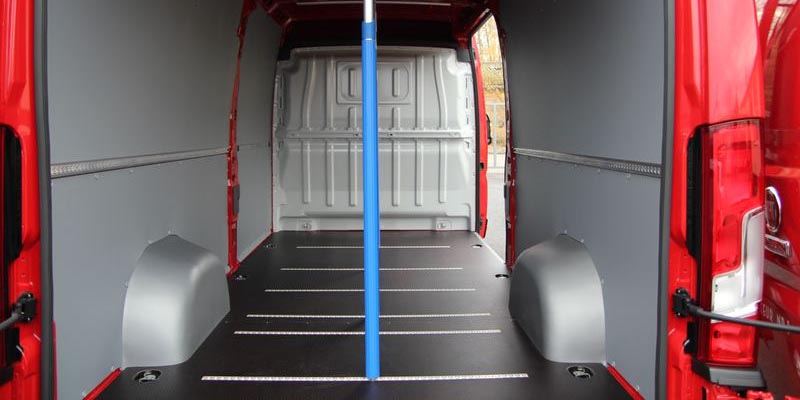
A load floor and wheel arch covers work well together because they protect different parts of the vehicle.
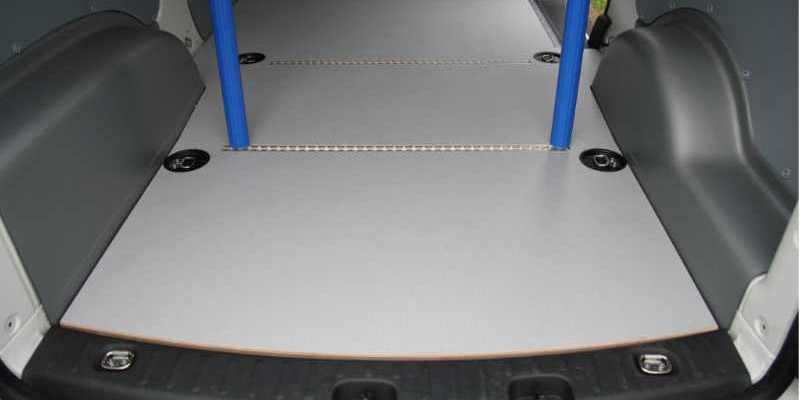
When combining the two, it is worth considering in advance how the components will meet. Depending on the vehicle and system, the wheel arch cover may sit on the floor, meet the edge of the floor or be integrated into the overall conversion.
If you are planning a completely new load area conversion, it therefore makes sense to consider the wheel arches, floor and side walls as one overall system.
Combining wheel arch covers with side wall lining
Side wall panels do not automatically protect the wheel arches. Because the wheel arches project further into the cargo space, they are often treated as a separate part of the interior.
A combination of:
- load floor
- side wall lining
- wheel arch covers
can therefore provide considerably more comprehensive protection than any one component on its own.
Are wheel arch covers useful in privately used vans?
Commercial use is not a requirement. Wheel arch protection can also be useful in privately used vans – for example in camper conversions, motorsport vehicles, hobby vans or vehicles regularly used to transport bicycles and other equipment.
Whether wheel arch covers are worthwhile ultimately depends on how frequently and intensively the load area is used.
Wheel arch protection for courier, trade and service vans
Wheel arch covers are particularly useful in commercial vehicles where the load area is in constant use.
Courier and delivery vans are opened, loaded and unloaded repeatedly throughout the working day. Parcels and transport containers are constantly being moved around the cargo area.
Trade vans carry toolboxes, machines, materials and equipment in a wide range of shapes and sizes.
Service vehicles often contain shelving or other installations, which makes the remaining usable load space more structured and can increase the amount of contact with exposed areas.
Wheel arch protection can therefore form part of a wider load area setup designed around the van's actual day-to-day use.
5 common mistakes when choosing or installing wheel arch covers
- Choosing by vehicle name only: Model year, generation and sometimes the vehicle configuration can be just as important.
- Assuming the covers are universal: Wheel arch shapes vary between vehicles and vehicle generations.
- Assuming installation materials are included: Screws, adhesives or other fixings are not supplied with every wheel arch cover.
- Ignoring the existing load area conversion: The floor, side wall lining and wheel arch covers should work together when installed.
- Confusing wheel arch protection with load securing: The covers protect vehicle surfaces; they do not restrain unsecured cargo.
Can wheel arch covers reduce noise inside a van?
Adding a cover changes the construction around the wheel arch, but this should not automatically be interpreted as providing a specific or measurable reduction in noise.
If the aim is to achieve targeted sound or thermal insulation, a dedicated insulation system should be used. The primary purpose of an ABS wheel arch cover is mechanical protection of the vehicle surface.
How should ABS wheel arch covers be cleaned?
Wheel arch covers are positioned directly inside the working area of the van and will naturally become dirty over time.
Dust, dirt and other residues should be removed regularly. Aggressive cleaning products should not be used without first checking their suitability for ABS plastic.
In commercially used vans, it is also worth checking the covers occasionally for damage and making sure that the fixing remains secure.
When should a wheel arch cover be replaced?
A wheel arch cover can only perform its job properly if it remains sufficiently intact and securely fitted.
Replacement may be advisable if:
- large cracks have developed
- the cover has become permanently deformed
- fixing areas are damaged
- the cover can no longer be securely attached
Minor signs of everyday use are normal in a working van and do not necessarily mean that the cover needs to be replaced.
Wheel arch covers or a complete load area conversion – which should come first?
That depends on how the van is going to be used and what type of conversion is planned.
If you are building a complete new load area, it makes sense to plan the floor, side walls and wheel arch protection together. This allows transitions and fixing points to be considered from the start.
If the aim is simply to protect individual high-contact areas, wheel arch covers can be installed first and the rest of the interior upgraded later.
If you are planning a complete load area conversion, decide which components will eventually be installed before starting the work. This can help avoid having to remove newly fitted wheel arch covers later when installing a floor, wall lining or shelving system.
How to choose the right wheel arch covers for your van
Before ordering, check the basic vehicle details:
- manufacturer
- vehicle model
- model year
- vehicle generation
- vehicle length, where relevant
- drivetrain, where relevant
Once these details are known, the product's specific vehicle compatibility can be checked.
You can find an overview of our currently available vehicle-specific solutions in the Wheel Arch Covers for Vans category.
FAQ – Wheel Arch Covers for Vans
Are wheel arch covers worth fitting in a van?
For vans that are regularly loaded and unloaded, wheel arch covers can be very useful. They create an additional protective layer over the projecting wheel arches and reduce direct contact between cargo and the original vehicle surface.
Why are wheel arch covers vehicle-specific?
The shape and dimensions of wheel arches vary between vehicles, generations and sometimes different vehicle configurations. The covers should therefore be selected specifically for the individual van.
What are the wheel arch covers made from?
The wheel arch covers available from Kurierbedarf are made from 3 mm thick ABS plastic. The material is flexible and UV-resistant.
Can wheel arch covers be retrofitted?
Yes. They can be added later to a van that already has a load floor or side wall lining, provided the individual installation allows it.
How are wheel arch covers installed?
Depending on the vehicle and product, installation may be possible by clamping, screwing or bonding. Always check the product-specific installation information and scope of delivery.
Are installation materials included with every wheel arch cover?
No. The scope of delivery varies between products. Check the individual product page to see whether fixings or installation materials are included.
Can wheel arch covers be combined with a load floor and side wall lining?
Yes. These components protect different areas of the load space and can therefore be combined to create more comprehensive interior protection.
Do wheel arch covers reduce road noise?
The primary purpose of ABS wheel arch covers is mechanical protection. If targeted noise reduction is required, a dedicated sound insulation system should be used.
Do wheel arch covers replace load securing?
No. Wheel arch covers protect vehicle surfaces. Cargo must still be properly secured independently of the wheel arch protection.
Wheel arch protection as part of a well-planned van load area
A wheel arch cover may be a relatively simple component, but it protects areas that are particularly exposed because of the way they project into the cargo space.
In commercially used vans, wheel arch protection can therefore be a useful addition to a load floor and side wall lining. The entire load area does not have to be converted at the same time either – wheel arch covers can be retrofitted or installed as part of a gradual upgrade.
The most important factor is selecting the correct vehicle application. The model name alone is not always enough. Model year, generation and, depending on the van, vehicle length or drivetrain can determine which wheel arch covers actually fit.
By checking these details before ordering and considering how the covers will integrate with the existing load area, you can create a practical solution that protects exactly the areas most exposed during everyday transport work.