Payment by Invoice |
 How to find our store
 info@kurierbedarf.com
 Purchasing for Swiss customers
Whether you're transporting toolboxes, machinery, construction materials or equipment, keeping cargo securely in place is one of the biggest challenges when using a truck, trailer or flatbed vehicle. Even carefully loaded cargo can shift during cornering, braking or uneven road conditions, increasing the risk of damage to both the load and the vehicle.
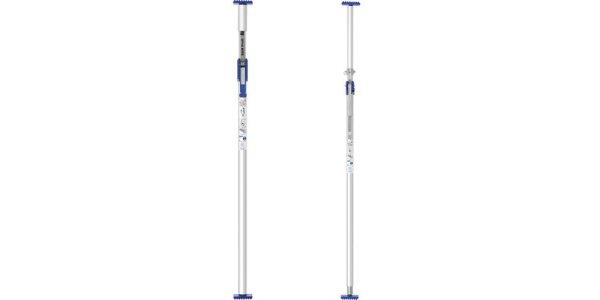
An adjustable cargo divider bar, also commonly referred to as a load lock bar or cargo retaining bar, provides a fast and effective solution. Installed between the vehicle's side boards, it divides the load area into separate sections and helps prevent cargo from sliding during transport.
In this guide, you'll learn how cargo divider bars work, how to choose the correct size, when they are the right solution and how they compare with other cargo securing systems such as tie-down straps and airline rails.
📘 Kurierbedarf Technical Guide
Anyone who regularly transports tools, machinery or building materials knows how quickly unsecured cargo can move around on a flatbed or trailer.
That's exactly why we created this guide. It explains how adjustable cargo divider bars work, how to choose the correct length and which cargo securing solution is best suited to your vehicle. You'll also find practical advice, comparison tables and recommendations based on real-world applications.
The Kurierbedarf Wiki is continuously expanding with expert guides covering commercial vehicles, cargo securing systems and professional vehicle equipment.
Practical. Easy to understand. Based on real experience.
What Is an Adjustable Cargo Divider Bar?
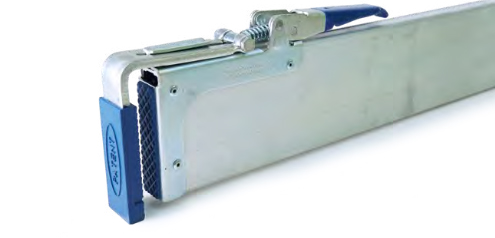
An adjustable cargo divider bar is an aluminium load restraint that is clamped securely between the side boards of a truck, trailer or flatbed vehicle. It creates a temporary dividing wall inside the load area, preventing cargo from shifting during transport without requiring additional anchor points.

Cargo divider bars are widely used by tradespeople, logistics companies, municipal fleets, construction businesses and landscaping professionals. They offer a simple way to organise the load area while improving cargo stability during everyday transport.
Unlike tie-down straps, which secure individual items, a cargo divider bar creates a physical barrier that keeps multiple items together. This makes loading and unloading faster while reducing the need to secure every toolbox or container individually.
How Does a Cargo Divider Bar Work?
The principle is straightforward.
A heavy-duty clamping mechanism locks the aluminium bar firmly between the vehicle's side boards. Once tension is applied, the bar remains securely in place and forms a stable barrier inside the load compartment.
Instead of restraining each individual item, the cargo divider bar limits the available movement of the entire load. Boxes, tools and equipment remain in their designated section, significantly reducing movement during braking or cornering.
Many professional users install multiple divider bars to create several organised cargo compartments, allowing different types of equipment to be transported safely at the same time.
Why Are Cargo Divider Bars So Popular?
In many industries, speed is just as important as safety.
Securing every individual toolbox with tie-down straps takes time. For tradespeople who make multiple stops every day, repeatedly fastening and releasing straps quickly becomes inefficient.
A cargo divider bar can usually be installed or repositioned within seconds. This allows the load area to be adapted quickly whenever the cargo changes throughout the working day.
Typical Cargo
- Toolboxes
- Power tools
- Construction materials
- Paint buckets
- Cable reels
- Landscaping equipment
- Plastic storage boxes
- Spare parts
- Maintenance equipment
🚛 Everyday Example
An electrician transports several toolboxes, cable reels and testing equipment on a flatbed vehicle. Without any load separation, the boxes begin to slide after only a few corners.
By installing a cargo divider bar, the load area is divided into separate sections. The equipment remains organised throughout the journey and can be unloaded immediately on arrival without first removing several tie-down straps.
Why Aluminium?
Most professional cargo divider bars are manufactured from aluminium because it combines low weight with excellent strength. The material is corrosion-resistant, durable and perfectly suited for demanding daily use.
Its lightweight construction also makes installation and repositioning quick and easy, even when the bar is used several times throughout the day.
💡 Kurierbedarf Expert Tip
What You'll Learn in the Next Section
Next, we'll explain how to measure the correct internal width of your vehicle, how to choose the appropriate cargo divider bar length and how our custom shortening service makes it easy to achieve a perfect fit for almost any truck, trailer or flatbed vehicle.
How to Choose the Correct Cargo Divider Bar Length
Selecting the correct cargo divider bar is easier than many people think. The most important measurement is not the overall width of your vehicle, but the clear internal distance between the two side boards.
This internal measurement determines whether the divider bar can be installed safely and provide the required clamping force for reliable cargo securing.
Always measure the clear internal width of your load area. Measuring the outside width of the vehicle will almost always result in selecting the wrong cargo divider bar.
Measuring Your Vehicle Correctly
Measuring your load area only takes a few minutes and helps prevent unnecessary returns or incorrect orders.
- Completely empty the load area.
- Measure the clear distance between both side boards.
- Select the matching cargo divider bar from the available adjustment ranges.
- If your measurement falls outside the standard sizes, take advantage of our custom shortening service.
Available Cargo Divider Bar Sizes
Our aluminium cargo divider bars are available in several adjustment ranges, making them suitable for a wide variety of commercial vehicles, trailers and flatbed trucks.
Each model offers a 300 mm adjustment range, allowing it to fit vehicles within the specified size range.
| Adjustment Range | Suitable Internal Width | Typical Applications |
|---|---|---|
| 1,700–2,000 mm | 1,700–2,000 mm | Compact trailers and small flatbeds |
| 1,800–2,100 mm | 1,800–2,100 mm | Commercial vans with dropside bodies |
| 1,900–2,200 mm | 1,900–2,200 mm | Municipal service vehicles |
| 2,000–2,300 mm | 2,000–2,300 mm | Trade and construction vehicles |
| 2,100–2,400 mm | 2,100–2,400 mm | Dropside trucks and transport vehicles |
| 2,200–2,500 mm | 2,200–2,500 mm | Large commercial trailers |
| 2,300–2,600 mm | 2,300–2,600 mm | Medium-duty trucks |
| 2,400–2,700 mm | 2,400–2,700 mm | Heavy-duty trucks and wide flatbeds |
Custom Lengths Available
Not every vehicle has a standard load area width. That's why we offer a professional shortening service for our aluminium cargo divider bars.
Instead of modifying the bar yourself, we can cut it to your required length before delivery. This provides a clean, ready-to-install solution that perfectly matches your vehicle.
Custom lengths are especially popular for municipal vehicles, specialist body conversions and bespoke flatbed trucks.
- Cut to your required dimensions.
- No additional modifications required.
- Ready for immediate installation.
- Professional solution for almost any vehicle.
🚛 Everyday Example
A construction company operates several flatbed vehicles with different body dimensions. While one vehicle matches a standard size, another has a customised load platform.
Thanks to our custom shortening service, both vehicles can use the same high-quality cargo divider bar system, ensuring consistent cargo securing across the entire fleet.
Why Correct Sizing Matters
A correctly sized cargo divider bar can be installed quickly and delivers the clamping force required for reliable cargo restraint.
If the divider bar is too short or too long, proper installation may not be possible, reducing its effectiveness.
For this reason, we always recommend measuring the internal width carefully before ordering. If you're unsure which size is right for your vehicle, our team will be happy to help.
Which Cargo Securing System Is Best for Your Vehicle?
There is no single cargo securing solution that fits every transport task. The right choice depends on your vehicle, the type of cargo and how often your load changes during the working day.
An adjustable cargo divider bar is an excellent solution for separating and stabilising cargo on flatbed vehicles and trailers. However, depending on your application, tie-down straps, airline rails or load lock bars may be the better option.
Understanding the strengths of each system helps you create a safer, more efficient and better organised load area.
Adjustable Cargo Divider Bars – Fast and Practical
Cargo divider bars are designed to divide the load area into separate sections. Instead of securing every individual item, they create a physical barrier that keeps equipment, boxes and materials together during transport.
This makes them particularly useful for tradespeople and service vehicles where the cargo changes several times throughout the day.
Main Advantages
- Installed within seconds.
- No anchor points required.
- Ideal for frequently changing cargo.
- Keeps tools and equipment organised.
- Speeds up loading and unloading.
Things to Consider
- Not intended as the only restraint for very heavy individual loads.
- Requires suitable side boards for installation.
- Heavy machinery should also be secured with tie-down straps where necessary.
Load Lock Bars – Flexible Inside Enclosed Vehicles
Load lock bars work on a similar clamping principle but are primarily used inside enclosed vans, box trucks and refrigerated vehicles. They are designed to brace cargo between the side walls or cargo rails inside the vehicle.
They are particularly useful when cargo is stacked at different heights or when internal load restraint is required.
Typical Applications
- Panel vans
- Box trucks
- Refrigerated vehicles
- Delivery fleets
Airline Rails – Maximum Flexibility
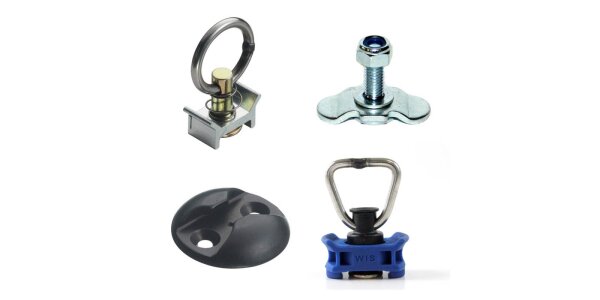
Airline rails provide adjustable anchor points for tie-down straps, fittings, cargo nets and many other accessories. Instead of dividing the load area, they create a highly flexible cargo securing system suitable for constantly changing transport requirements.
They are commonly installed in commercial vans, camper conversions, trailers and expedition vehicles.
Ideal For
- Commercial vans
- Camper conversions
- Utility trailers
- Workshop vehicles
- Expedition and overlanding vehicles
Tie-Down Straps – The Classic Cargo Restraint
Tie-down straps remain one of the most versatile cargo securing solutions. They are particularly effective for securing heavy machinery, pallets and individual loads that require direct restraint.
Combined with airline rails or suitable anchor points, they provide excellent load security for demanding transport applications.
Comparison of Cargo Securing Systems
| Feature | Cargo Divider Bar | Load Lock Bar | Airline Rail | Tie-Down Strap |
|---|---|---|---|---|
| Quick Installation | ⭐⭐⭐⭐⭐ | ⭐⭐⭐⭐ | ⭐⭐⭐ | ⭐⭐⭐ |
| Load Area Organisation | ⭐⭐⭐⭐⭐ | ⭐⭐⭐⭐ | ⭐⭐ | ⭐ |
| Heavy Individual Loads | ⭐⭐ | ⭐⭐⭐ | ⭐⭐⭐⭐ | ⭐⭐⭐⭐⭐ |
| Flexible for Changing Cargo | ⭐⭐⭐⭐⭐ | ⭐⭐⭐⭐ | ⭐⭐⭐⭐⭐ | ⭐⭐⭐⭐ |
| Requires Anchor Points | No | No | Yes | Yes |
🚛 Typical Real-World Applications
Electricians, plumbers and service technicians often transport multiple toolboxes and equipment. A cargo divider bar keeps everything organised while allowing fast loading and unloading.
Construction Companies
Heavy machinery and pallets should always be secured with tie-down straps. Cargo divider bars are ideal for separating smaller equipment and materials within the load area.
Camper & Overland Vehicles
Airline rails provide maximum flexibility for securing luggage, storage boxes, bicycles and camping equipment using a wide range of compatible fittings.
Our Recommendation
In professional transport, the safest solution is often a combination of several cargo securing systems rather than relying on just one.
A cargo divider bar quickly organises the load area, tie-down straps secure heavy individual items, and airline rails provide flexible anchor points whenever transport requirements change.
Choosing the right combination depends entirely on your vehicle, your cargo and your daily working environment.
Which Solution Should You Choose?
| If You Need To... | Recommended Solution | Why? |
|---|---|---|
| Separate toolboxes and equipment | ✅ Cargo Divider Bar | Creates organised load compartments within seconds. |
| Secure heavy machinery or pallets | ✅ Tie-Down Straps | Provides direct and secure load restraint. |
| Create adjustable anchor points | ✅ Airline Rails | Maximum flexibility for changing cargo. |
| Secure cargo inside enclosed vans | ✅ Load Lock Bar | Designed for bracing loads between interior side walls. |
⚠️ Common Mistakes When Using a Cargo Divider Bar
Even the highest-quality cargo divider bar can only perform as intended when it is correctly selected and properly installed. Based on our experience, the same mistakes appear time and time again—and fortunately, they are all easy to avoid.
1. Measuring the Outside Width of the Vehicle
The only measurement that matters is the clear internal distance between the side boards. Measuring the overall vehicle width often results in choosing the wrong size.
2. Using a Cargo Divider Bar as the Only Cargo Restraint
A cargo divider bar is excellent for preventing cargo from shifting, but very heavy machinery, pallets or other high-mass loads should also be secured with suitable tie-down straps where required.
3. Ignoring Dirty or Damaged Contact Surfaces
Oil, mud, ice or damaged side boards can reduce the clamping performance. Always ensure the contact surfaces are clean before installation.
4. Leaving Large Gaps Between Cargo
A cargo divider bar performs best when the load is arranged as compactly as possible. Large empty spaces allow cargo to gain momentum during transport.
5. Using Only One Divider Bar for Large Load Areas
On longer flatbed vehicles it is often beneficial to install multiple divider bars to create separate cargo zones and improve overall load stability.
💡 Kurierbedarf Expert Tips
- Divide your load into smaller sections whenever possible.
- Position heavier cargo close to the front bulkhead.
- Combine cargo divider bars with anti-slip mats for improved stability.
- Use tie-down straps for heavy individual loads.
- Inspect the clamping mechanism and rubber contact points regularly.
- Check that the divider bar is firmly secured before every journey.
✔ Buying Checklist
Before ordering your cargo divider bar, take a moment to go through this simple checklist.
☐ Measure the internal width of your load area.
☐ Check the thickness of your side boards.
☐ Select the correct adjustment range.
☐ Consider whether a custom length would provide a better fit.
☐ Think about the type of cargo you transport most often.
☐ Decide if additional tie-down straps or airline rails are required.
Recommended Products to Complete Your Cargo Securing System
A cargo divider bar is often just one part of an effective cargo securing solution. Depending on your application, additional products may help improve safety, flexibility and load organisation.
- Airline rails for adjustable anchor points.
- Tie-down straps for heavy machinery and pallets.
- Anti-slip mats to increase friction between cargo and the load floor.
- Load lock bars for enclosed vans and box trucks.
- Cargo nets for lightweight equipment and loose items.
Final Recommendation
For most tradespeople, construction companies and commercial vehicle operators, an adjustable cargo divider bar is one of the quickest and most practical ways to organise a load area and reduce cargo movement.
However, the safest transport solution is usually achieved by combining several cargo securing systems. A cargo divider bar keeps equipment organised, tie-down straps secure heavy individual loads, airline rails provide flexible attachment points and anti-slip mats help reduce unwanted movement.
Choosing the right combination depends on your vehicle, your cargo and your daily transport requirements.
Conclusion
An adjustable cargo divider bar is a simple yet highly effective solution for improving cargo organisation and load stability in trucks, trailers and flatbed vehicles. Thanks to its lightweight aluminium construction, robust steel clamping mechanism and wide range of available sizes, it is ideally suited for demanding professional use.
Combined with our custom shortening service, almost any vehicle can be equipped with a perfectly fitting cargo divider bar, providing a practical and reliable cargo securing solution for years to come.
📘 This article is part of the Kurierbedarf Technical Guide and is regularly reviewed and updated to reflect current products, practical experience and technical developments.