 Payment by Invoice |
 How to find our store
 info@kurierbedarf.com
 Purchasing for Swiss customers
Lashing rails play a central role in professional load securing in vehicles. They form the basis for the safe use of tension belts, locking beams and other securing elements. Two systems are used particularly frequently: the lashing rail and the airline rail. Both variants have their specific properties, advantages and areas of application.
In this article, we will compare the pole lashing rail and the airline rail in detail. The aim is to provide a sound basis for deciding which lashing rail system is better suited to which application.Basics of lashing rail systems
Lashing rails serve as fixed attachment points in the vehicle. They allow flexible positioning of lashing equipment and make a significant contribution to safety during transportation. The choice of the right system depends on various factors, including the type of load, vehicle type, desired flexibility and load capacity.
Both standard lashing rails and airline rails fulfill this basic function, but differ significantly in terms of design, operation and possible applications.
What is a bar lashing rail?
The bar lashing rail usually consists of an aluminum profile into which solid round bars are integrated at regular intervals. These bars serve as attachment points for lashing straps, locking beams or other securing elements.
The fixed spacing of the lashing bars, often 100 or 120 mm, is typical for lashing rails. The rails are usually mounted horizontally on the sides of the vehicle and are designed to be particularly robust.
Constructive features of the bar lashing rail- Sturdy aluminum profile
- Massive round bars as mounting points
- Fixed grid spacing
- Commonly available with rubber protection or PVC coating
- Predrilled fixing holes for mounting
Due to their design, bar lashing rails are particularly resistant and durable
What is an airline rail
The airline rail, also known as logistics rail or airline lashing strip, originally comes from the aviation industry. It has a standardized hole pattern into which special fittings can be inserted.
These fittings can be positioned freely along the rail and enable flexible load securing. Airline rails are available for wall, floor and ceiling mounting.
Constructive features of the airline rail
- Aluminium profile with standardized hole pattern
- Use of special airline fittings
- High flexibility in positioning
- Various profile shapes (semicircular, retractable, flat)
- Large selection of accessories
Airline rails are considered to be particularly versatile and modular.
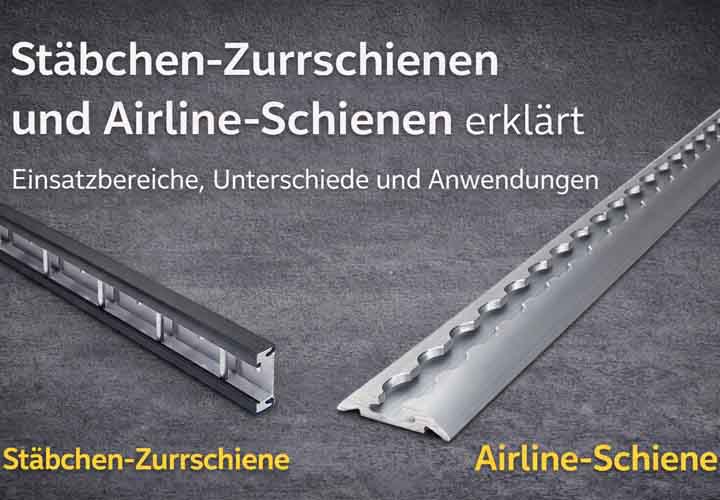
Direct comparison: bar lashing rail vs. airline rail
In order to clearly highlight the differences, we look at the most important criteria in a direct comparison
Flexibility
The airline rail offers a very high level of flexibility. Fittings can be moved continuously along the rail and positioned exactly where they are needed.
In contrast, the bar lashing rail is limited to fixed mounting points. The spacing of the bars is predetermined, which makes positioning somewhat less flexible.
Resilience
Bar lashing rails are known for their high mechanical load-bearing capacity. The solid bars are particularly suitable for heavy loads and high tensile forces.
Airline rails also achieve high load values, but these depend heavily on the fitting used, the type of installation and the surface.
Operation and handlingThe operation of a bar lashing rail is simple and intuitive. Lashings are attached directly to the bars without the need for additional adapters.
A suitable fitting is always required for airline rails. Although this increases flexibility, it requires more components and a little more handling.
Installation effort
Both systems must be installed professionally. Bar lashing rails often have pre-drilled holes, which makes installation easier.
Airline rails offer various installation options, including screwing, riveting or embedding in the vehicle floor. The effort required can vary depending on the variant.
Protection of sensitive cargo
Bar lashing rails are often available with rubber protection. This reduces damage to sensitive loads and lashing equipment.
Airline rails themselves do not offer integrated protection, but can be combined with suitable fittings and edge protectors.
Typical areas of application for the bar lashing rail
Panel lashing rails are the preferred choice when robustness and easy handling are paramount:
- Transport of machines and heavy goods
- Trade and service vehicles
- Vehicles with frequently changing but heavy loads
- Transports with high mechanical loads
Their robust design makes them particularly suitable for continuous use
Typical areas of application for the airline rail
Airline rails are used wherever maximum flexibility is required:
- Transport of sensitive or differently sized goods
- Individual vehicle conversions
- Combination of lashing straps, nets and locking bars
- Changing loading concepts
They are ideal for users who need to adapt their load securing regularly.
Safety aspects and responsibility
Regardless of the lashing rail system selected, the load capacity of the load securing depends not only on the rail itself, but also to a large extent on the surface, the installation and the securing equipment used.
Installation should always be carried out professionally. The responsibility for correct installation and the resulting safety lies with the installer of the load securing equipment.
Conclusion: which lashing rail is the right one?
Whether a bar lashing rail or an airline rail is the better choice depends heavily on the intended use.
The bar lashing rail impresses with its high robustness, easy handling and clear structures. It is ideal for heavy loads and users who prefer a reliable, uncomplicated system.
The airline rail scores with maximum flexibility and versatile application options. It is particularly suitable for complex or frequently changing load situations.
In many vehicles, both systems are even combined in order to make optimum use of the advantages of both lashing rail types.
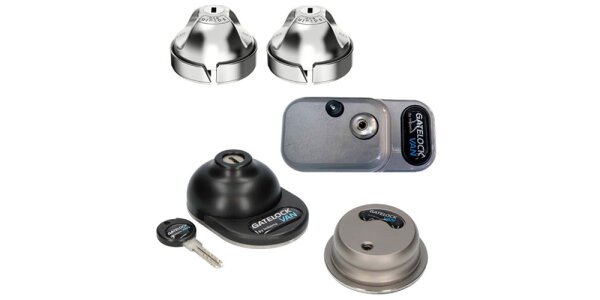
Kurierbedarf WIKI – Van Security LocksQuick overview: Mechanical security locks add an extra physical locking point to the standard door security of a van. Depending on the working routine, an
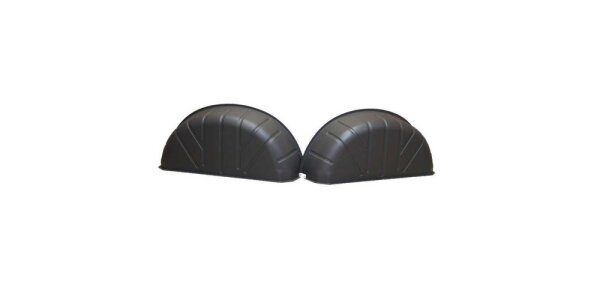
Kurierbedarf WIKI – Wheel Arch Covers for VansQuick overview: Wheel arch covers protect the projecting wheel arches inside a van's load area from the typical wear and contact caused by everyday
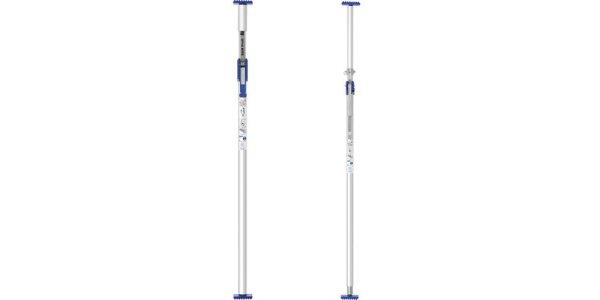
Kurierbedarf WIKI – Clamping Bars & Load Lock BarsQuick overview: Clamping bars are telescopic load-securing devices for vans, trucks, trailers and box bodies. Conventional versions are
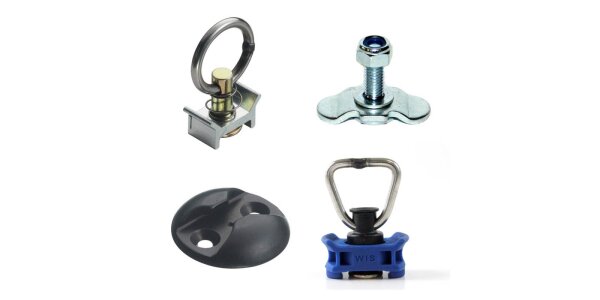
WIKI – Airline Rail AccessoriesFittings, tie-down straps, cargo bars, threaded fittings and sliding nuts turn an Airline Rail into a versatile system for load restraint and equipment mounting.