 Payment by Invoice |
 How to find our store
 info@kurierbedarf.com
 Purchasing for Swiss customers
Renault Trafic
The Renault Trafic has been one of Europe's most reliable and popular vans for decades. Since its market launch in 1980, the Trafic has evolved from a compact tradesman's vehicle to a modern transport professional. In its current generation (from 2014, facelift in 2022), it impresses with a well-thought-out concept, high load volume, and solid build quality. Whether for trade, service, delivery, or private use, with the right van accessories for the Renault Trafic, the vehicle can be optimally adapted to individual needs.
...mehr lesen
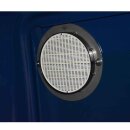


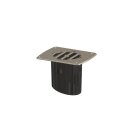
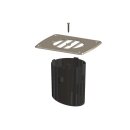
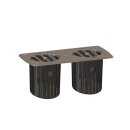
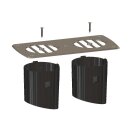
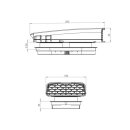
The single floor fan ensures safe ventilation in the transporter, reduces heat, gases, and odors, and complies with legal requirements. Ideal for transporting gas cylinders and damp cargo. Compact, robust, and easy to install.
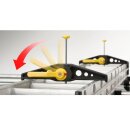
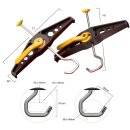


Access ramp - lightweight design


Loading ramp with raised edge in various lengths


Short loading ramp with raised edge in various lengths



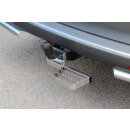
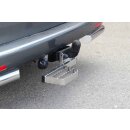



Foldable loading ramp with raised edge in various lengths
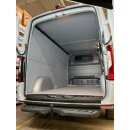

plywood headliner for Renault Trafic from 2014 onwards with double
cab - Vehicle length: 5,480
mm - Cargo area length: 1,819 mm
cab - Vehicle length: 5,080 mm
- Cargo area length: 1,419 mm
- 4 mm plastic
honeycomb profile - 4 mm multiplex plywood
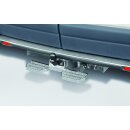


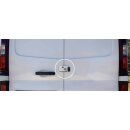
Van accessories for the Renault Trafic
In our range, you will find custom-fit cargo area linings, van floors, roof racks, side bars, front guards, partition walls, and many other accessories for all Renault Trafic generations. Whether you need to secure your load with airline rails, tension belts, and locking bars or create a functional interior design, all products are vehicle-specific and precisely tailored to the Trafic.
Renault Trafic – development over four generations
- Trafic I (1980–2000): The first Renault Trafic was a compact front-wheel drive vehicle with numerous variants – from panel vans to minibuses. It already offered a generous load volume and was considered very robust.
- Trafic II (2001–2014): Joint development with Opel Vivaro A and Nissan Primastar. Significantly more modern design, two wheelbases (L1/L2) and optional high roof (H2). Popular with tradespeople and service fleets due to its reliability and versatility.
- Trafic III (2014–2021): Further developed engines, more efficient use of space, and revised driver assistance systems. From 2020 with facelift, LED technology, and modern front end. Identical to Vivaro B and Nissan NV300.
- Trafic IV (from 2022): Latest generation with digital cockpit, optional electric version (E-Trafic), and improved ergonomics. Based on the proven Renault commercial vehicle platform, it remains a true all-rounder for commercial and private users.
Models, lengths, and vehicle dimensions
The Renault Trafic is available in two wheelbases and two roof heights. This means that both compact city transport and large-volume loading tasks can be mastered with ease. The following table shows the most important dimensions of the common variants.
📏 Renault Trafic vehicle dimensions at a glance
| Variant | Wheelbase | Cargo space length | Vehicle length | External height | Permissible total weight |
|---|---|---|---|---|---|
| Trafic L1H1 (short, standard roof) | 3,098 mm | 2,537 mm | 4,999 mm | 1.97 m | 2.8–3.0 t |
| Trafic L2H1 (long, standard roof) | 3,498 mm | 2,937 mm | 5,399 mm | 1.97 m | 2.8–3.1 t |
| Trafic L2H2 (long, high roof) | 3,498 mm | 2,937 mm | 5,399 mm | 2.50 m | 2.9–3.1 t |
| Trafic II L1H1 (2001–2014) | 3,098 mm | 2,400 mm | 4,782 mm | 1.95 m | 2.7–2.9 t |
| Trafic II L2H2 | 3,498 mm | 2,800 mm | 5,182 mm | 2.45 m | 2.8–3.0 t |
All dimensions are approximate and may vary slightly depending on equipment, roof height, and year of manufacture.
Conclusion: Renault Trafic accessories – practical and durable
With our van accessories for the Renault Trafic, you can increase the comfort, safety, and efficiency of your vehicle. Whether you need cargo area trim, roof racks, or side steps, all products are durable, functional, and precisely tailored to the respective Trafic generation. This ensures that your van remains reliable in use—day after day, from the Trafic II to the modern Trafic IV.